Travis McCoy and Penelope McCoy’s marriage
The Journey CollectionTravis McCoy and Penelope McCoy’s marriage is the culmination of a return: Travis comes back to the woman he once left, accepts his place as Max’s father, and commits to building a family with them. Their wedding gives public and familial form to a bond renewed after years apart, while their later life together shows that the marriage means not simply reunion but an expanding household and a future no longer organized around Travis’s football career.
From separation to renewed commitment
Before the marriage, Travis’s departure had deeply hurt Penelope, the woman he understood to have believed in him when he was young. He remembers leaving her as one of the hardest moments of his life, and finds that going home is harder still. When he returns to Clarendon, the town’s familiar streets and the high-school football rally bring back the life he left behind. His memories of Penelope remain bound to that past: he imagines her beside him in the car and recalls how she had made everything better, before acknowledging that he was the one who had ruined it by leaving.
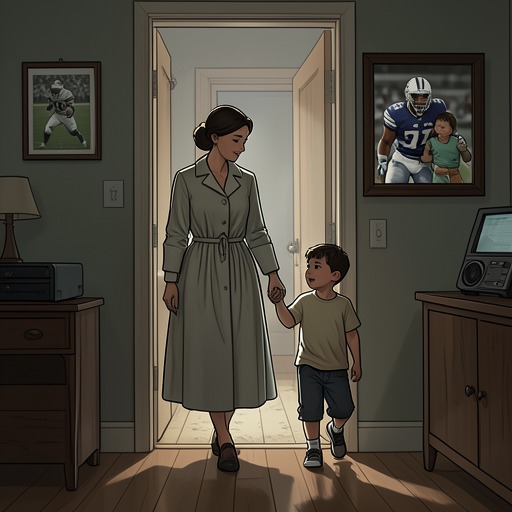
Their reunion becomes a family relationship as well as a renewed romance when Max asks Travis directly when he was going to tell him he was his father. Max had already worked out the connection from Penelope’s reaction to the Miami Sharks games and photographs she kept. Rather than respond with anger, he says Travis is here now and that they can be a real family. Travis promises that they can. The exchange establishes the practical and emotional ground on which the later marriage rests: Penelope and Travis’s commitment must include Max, not remain a private reconciliation between the adults.
A proposal shaped by fatherhood
Five months after finding Penelope and Max again, Travis is ready to propose. He reflects on the ten years of Max’s life he missed while pursuing professional football, and on how completely his priorities have changed: he is willing to give up the career and its public rewards for Penelope and their son. The small black velvet ring box makes the impending proposal tangible, but his stated aim is larger than marriage alone. He wants to promise Penelope a lasting partnership and to make the family he has only recently found his future.
Travis proposes by recalling their shared past and telling Penelope that he has loved her since they were young. He kneels, opens the velvet box, and asks her to marry him; she answers yes through tears. The proposal revisits their earlier connection without pretending the intervening separation did not happen. Travis’s renewed pledge matters because he has returned after leaving, and because he now understands his commitment as one to Penelope and Max together.
Before the wedding, Travis asks Penelope to let Max take the McCoy surname. He connects the request to the family identity they are making: if Penelope is to become a McCoy, he wants Max to share the name too. The timing gives the request added personal meaning. Travis says June 1 is his mother’s birthday and that becoming the man she believed he could be is a way to honor her. Penelope agrees, proposing that they contact the judge on Monday to learn what the process requires. The exchange records an intention and a planned legal step, rather than confirming that the name change has already been completed.
The wedding as a family ceremony
At the wedding, Travis and Penelope face one another as Reverend Brown conducts the ceremony. They vow to love each other through prosperity and hardship, sickness and health, and good times and bad; when they exchange rings, both are moved to tears. Their vows make explicit the endurance that their history has tested, while the rings mark their promises in front of the gathered witnesses.
The ceremony deliberately includes Max. Halfway through, Travis and Penelope invite him to stand between them, and the three light an eternity candle together as a family. The gesture makes the marriage more than a union of two adults: Max is placed physically and ceremonially within it. After Reverend Brown pronounces them husband and wife, Travis calls Penelope Mrs. McCoy, and she answers by calling him Mr. McCoy before their first kiss as spouses. The new forms of address accompany a family bond already being enacted through their shared place with Max.
Max’s participation also reflects the trust the relationship has had to earn. Before Travis returned, Max saw Penelope’s sadness and sometimes heard her crying; as the wedding approaches, he makes clear that protecting his mother is his responsibility and wants assurance that Travis will not hurt her. Travis tells him that he loves Penelope and would not hurt her. The wedding therefore follows not only romantic reconciliation but Max’s observation of his mother’s loneliness and his cautious acceptance of Travis’s place beside her.
Married life and an expanding family
Two years later, Travis’s life has changed far beyond his marital status. A professional football injury has ended his career, and returning home has brought him into confrontation with his past. He and Russ McCoy have begun repairing their damaged relationship and are now closer than before. In this later family setting, Travis understands Max as the person who brought them all together: he recalls recognizing him as his son, his initial anger at the lost years, and his eventual understanding of Penelope’s explanation for keeping the pregnancy from him. The account places Travis and Penelope’s marriage within a wider reconciliation, rather than treating it as an isolated happy ending.
The household grows again when Penelope’s family reveals an ultrasound photograph. Russ lifts the framed image from its box and demands to know whether the news is a joke, while Max jokes that he had not been about to say anything. At the meal that follows, Nadine asks Penelope about how she is feeling, her due date, and possible names. Travis watches the family share food and conversation and recognizes that he now has a mother and father, a son, a wife, and another baby on the way. The marriage has become the center of a family life that includes repaired relationships across generations and the expectation of a new child.
Significance of the marriage
The marriage completes Travis’s movement from pursuit of professional achievement toward a life defined by belonging and responsibility. His return to the high-school field and the community’s welcome help establish what home means to him; his later promises to Penelope and Max give that feeling a durable personal form. At the wedding, the candle and Max’s place between the couple make the family visible as a unit. In the later scenes, the McCoys’ shared meals and anticipation of a baby show the consequences of that commitment in everyday family life. The marriage is therefore both a romantic resolution and the structure through which Travis’s renewed relationships—as husband, father, son, and member of a family—can continue.